
 home
home
 Published: Jun 05, 2026 12:19 PM
 Page View: 149
As global energy demand continues to rise and environmental regulations become increasingly stringent, power generation facilities are under growing pressure to improve operational efficiency, reduce emissions, and maintain system reliability. One of the most effective ways to achieve these goals is through boiler control system optimization, a critical component of modern power plant automation strategies.
Boilers are the heart of thermal power generation systems, responsible for producing the steam required to drive turbines and generate electricity. Any inefficiency in boiler operation directly impacts fuel consumption, power output, maintenance costs, and environmental performance. As a result, advanced boiler control technologies have become essential for power plants seeking sustainable and cost-effective operations.
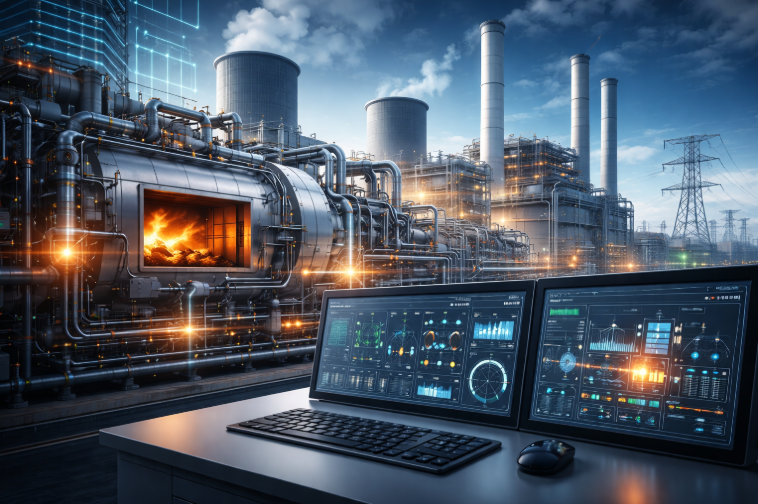
A boiler control system manages key operating parameters including fuel flow, air supply, steam pressure, water level, furnace temperature, and combustion conditions. Traditional control systems often rely on fixed settings and manual adjustments, which can lead to energy waste and inconsistent performance.
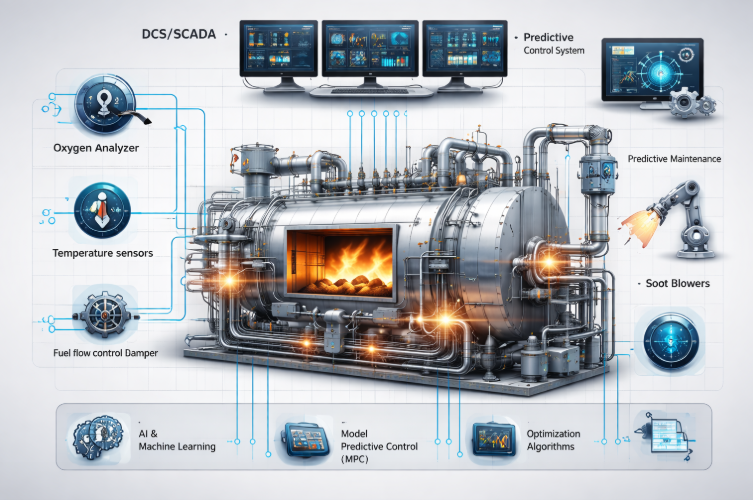
Modern boiler automation systems utilize intelligent sensors, PLCs, DCS platforms, and advanced control algorithms to continuously monitor operating conditions and make real-time adjustments. These technologies help maintain optimal combustion efficiency, improve heat transfer performance, and ensure stable steam production. Studies and industry deployments have shown that advanced combustion control can improve efficiency, reduce fuel consumption, and lower emissions through continuous monitoring of oxygen and combustion conditions.
For power plant operators, optimizing boiler controls means achieving better operational stability while minimizing production costs.
Many power plants continue to operate aging boiler systems that face several common challenges:
Excessive fuel consumption
Inconsistent steam pressure
High NOx and CO emissions
Poor combustion efficiency
Thermal stress on equipment
Increased maintenance requirements
Limited visibility into system performance
Without proper optimization, these issues can significantly reduce overall plant efficiency and profitability.
One of the most important aspects of boiler optimization is combustion control. Efficient combustion requires maintaining the correct air-to-fuel ratio under varying load conditions.
Modern combustion control systems use real-time measurements from oxygen analyzers, flue gas sensors, and temperature transmitters to continuously adjust fuel and airflow. This process helps maximize energy extraction while reducing incomplete combustion losses. Advanced systems can improve efficiency while reducing emissions through automated fuel-air ratio optimization and continuous feedback control.
Key technologies include:
Oxygen trim systems automatically adjust combustion air levels based on measured oxygen concentrations in exhaust gases. This minimizes excess air and reduces heat loss.
Cross-limiting strategies ensure safe coordination between fuel and air flow during load changes, preventing unsafe combustion conditions.
MPC uses mathematical models to predict future process behavior and optimize control actions. Many power plants have adopted MPC to stabilize combustion and improve boiler performance under varying operating conditions.
Artificial Intelligence and machine learning technologies are increasingly being deployed to analyze historical operational data and identify optimal combustion settings. Research and real-world deployments demonstrate that AI-driven optimization can improve combustion efficiency and plant performance.
Modern power plants rely heavily on Distributed Control Systems (DCS) and SCADA platforms to provide centralized monitoring and control.
By integrating boiler controls with plant-wide automation systems, operators gain access to:
Real-time performance dashboards
Historical trend analysis
Predictive maintenance insights
Alarm management
Remote monitoring capabilities
Automated reporting functions
Next-generation DCS platforms enable greater visibility, faster decision-making, and more efficient boiler management across the entire facility.
Energy efficiency remains a top priority for power producers worldwide. Boiler optimization contributes directly to reducing fuel consumption and improving overall plant heat rates.
Several proven optimization methods include:
Maintaining optimal feedwater temperatures improves heat transfer efficiency and reduces fuel requirements.
Intelligent soot blower control minimizes fouling and maintains efficient heat exchange surfaces.
Advanced control systems distribute load more effectively among multiple boilers, ensuring each unit operates within its most efficient range.
Integrating economizers and air preheaters helps recover waste heat and improve thermal efficiency. Industry experience consistently shows that heat recovery technologies play a significant role in reducing fuel consumption.
Environmental regulations continue to tighten across global power markets. Boiler optimization plays a vital role in reducing emissions and supporting compliance initiatives.
Advanced monitoring systems continuously track:
NOx emissions
CO emissions
Oxygen levels
Particulate matter
Combustion efficiency
Automated control strategies can maintain emissions within regulatory limits while preserving plant performance. Several advanced optimization platforms report measurable reductions in NOx emissions and improvements in overall environmental performance.
Unexpected boiler failures can lead to costly outages and production losses. Modern optimization systems incorporate predictive maintenance capabilities that help operators identify potential issues before they result in equipment failures.
Using sensor data and advanced analytics, these systems can detect:
Burner degradation
Heat exchanger fouling
Sensor drift
Air leakage
Feedwater system problems
Control valve performance issues
Early detection reduces maintenance costs while improving equipment reliability and availability.
The future of power plant boiler control is increasingly driven by digital transformation technologies.
Emerging trends include:
Industrial Internet of Things (IIoT)
Cloud-based monitoring systems
Digital twins
Artificial intelligence
Edge computing
Advanced process control
Cybersecure remote operations
As these technologies continue to mature, power plants will gain even greater opportunities to improve efficiency, reduce emissions, and maximize asset performance.
Boiler control system optimization has become a strategic priority for modern power plants seeking to remain competitive in an increasingly demanding energy landscape. By adopting advanced combustion control, DCS integration, predictive analytics, and AI-driven optimization technologies, operators can significantly improve efficiency, reduce fuel consumption, enhance environmental compliance, and increase system reliability.
For power generation facilities planning future modernization projects, investing in intelligent boiler automation solutions is no longer an option—it is a necessity for achieving long-term operational excellence and sustainable growth.
Easy Semiconductor Technology (Hong Kong) Limited continues to support industrial customers with advanced automation, control, and monitoring solutions that help maximize performance across power generation and industrial energy applications.